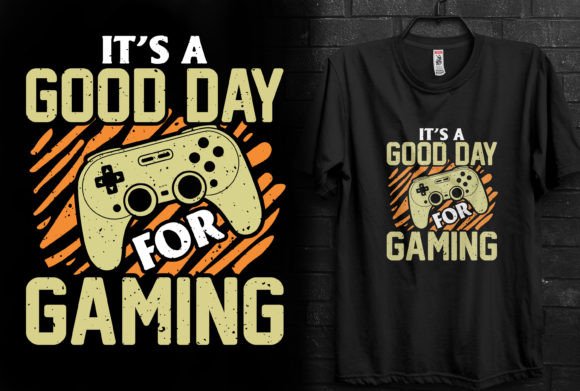
Stitching Joy: A Designer’s Take on It’s a Good Day for Gaming
As someone who has spent countless hours staring at digitized files and watching needles dance across fabric, I have learned to look past the initial flash of a graphic. When I first pulled up It s a Good Day for Gaming, my immediate reaction was not just about the visual appeal, but about its potential life as a stitched object. We often see designs marketed broadly as T-Shirt Designs or general Graphics, but the true test for any embroidery professional is how that artwork translates when subjected to the physical constraints of thread, tension, and fabric texture.
The First Impression: Mood and Layout
The phrase itself carries a specific energy. It is casual, inviting, and taps into the massive cultural footprint of gaming culture without being overly aggressive or niche-specific. Visually, the layout feels balanced. For an embroidery project, balance is everything. If the design is too top-heavy, it pulls on the garment; if it is too wide, it distorts on curved surfaces like sleeves or caps. This particular design seems to offer a clean silhouette that would sit comfortably on a chest pocket area or centered on the back of a hoodie.
The mood it creates is lighthearted. It is not trying to be high-fashion or minimalist; it is celebrating a hobby. This makes it incredibly versatile for a range of clients, from teenagers wanting custom apparel to adults looking for comfortable, personality-driven loungewear. As a reviewer, I appreciate that the theme is clear. There is no ambiguity in the message, which reduces the cognitive load for the buyer. They see it, they get it, and they want it.
Real-World Application: Beyond the Screen
Let us move away from the digital preview and imagine this in a real production environment. I recently considered a similar concept for a custom order involving a batch of heavy-weight cotton tote bags. The client wanted something that felt modern but durable. It s a Good Day for Gaming would have been an excellent candidate here, provided the digitization supports the weight of the canvas.
For sweatshirt embroidery, this design shines. The thick pile of fleece or French terry cloth can swallow up fine details, so a design with bold lines and clear spacing is essential. If this file uses appropriate fill stitch patterns rather than relying solely on delicate running stitch outlines, it will pop against the textured background. I can easily visualize this on a charcoal grey or navy pullover, using bright cyan or lime green thread colors to create that classic "gamer" aesthetic without looking cheap.
Another strong use case is the embroidered patch. Patches are having a moment in boutique branding and craft fair products. Because patches are often handled and washed frequently, the durability of the stitch density matters. If the design allows for a tight, secure border, it becomes a high-value add-on for jackets, backpacks, or laptop bags. It transforms a simple accessory into a statement piece.
Technical Considerations for the Stitcher
While the concept is strong, the execution depends entirely on the technical quality of the machine embroidery design. Here is where my experience as a designer kicks in. I always advise checking the following before committing to a full production run:
- Stitch Density: Check if the fill areas are too dense. High density on stretchy fabrics like jersey t-shirts can cause puckering. You may need to adjust the pull compensation or use a cut-away stabilizer.
- Small Details: Look closely at any small icons or letters within the graphics. If they are smaller than 0.2 inches, they might not stitch out cleanly on standard home machines. Tiny elements often turn into blobs of thread if the needle size and thread weight are not perfectly matched.
- Color Transitions: How many color stops does the design require? Each stop adds time and complexity. For a craft business owner, efficiency is profit. A design that achieves impact with fewer color changes is often more viable for small shop products.
I also recommend testing the design on scrap fabric first. Do not skip this step. Run it on the same type of material you intend to sell. If you are making a personalized gift for a baby, test it on soft interlock knit. If it is for a holiday embroidery project on a towel, test it on terry cloth. The behavior of the thread changes dramatically based on the substrate.
Navigating Fabric and Hoop Constraints
One must be cautious with curved surfaces. If you plan to put It s a Good Day for Gaming on a cap, you need to ensure the design fits within a standard cap hoop, usually around 4x4 inches or smaller depending on the machine. Wide designs distort on the front panel of a hat. Similarly, avoid placing large, dense fill areas on thin fabrics like silk or lightweight rayon unless you are using a very stable backing and perhaps converting parts of the design to an applique design to reduce bulk.
Dark fabrics present another challenge. If the design relies on subtle shading, it may get lost on black or dark navy garments. In these cases, consider adding a light-colored underlay or choosing high-contrast thread colors. A quick check in black and white mockups can reveal if the design holds its shape without color reliance.
Commercial Viability and Brand Trust
For Etsy sellers and digital product sellers, the perceived value of the finished product is tied to the clarity of the stitch work. A messy, tangled design erodes customer trust. Conversely, a crisp, well-digitized version of It s a Good Day for Gaming elevates the brand. It signals professionalism. When customers receive a handmade product that looks polished, they are more likely to leave positive reviews and return for future purchases.
This design fits well into the category of custom apparel that sells year-round. While it is not strictly seasonal, it could be marketed heavily during back-to-school seasons or holiday gift guides. It appeals to the recipient’s identity, which is a powerful driver in the small shop product market.
Final Verdict and Practical Advice
Before you list this as a digital embroidery file or use it in your next batch of design assets, verify the license terms. The description mentions it is for POD (Print on Demand) business and personal use, but embroidery licensing can vary. Ensure you have the right to sell physical items made with this file. Also, confirm the file formats provided. You will need DST, PES, JEF, or other machine-specific formats depending on your equipment.
In summary, It s a Good Day for Gaming is a promising candidate for various embroidery projects. Its strength lies in its relatable theme and likely bold composition. However, its success in the real world depends on your technical setup. Respect the fabric, respect the hoop size, and always prioritize stitch clarity over complexity. Whether you are creating a tote bag design for a local convention or a baby embroidery piece for a shower gift, this design offers a solid foundation for creative expression. Just remember to test, tweak, and stitch with intention.